Considering an ADU in Montecito? The opportunity is real, but the path is different here than in many parts of California. You are planning in an unincorporated coastal community with layered rules that protect our shoreline, views, and fire safety. In this guide, you will learn the state basics, Montecito-specific coastal and design considerations, realistic timelines, and a step-by-step path to move forward with confidence. Let’s dive in.
ADU basics in California
Accessory Dwelling Units are self-contained homes on the same lot as a primary residence. Junior ADUs are smaller units within the existing home. State law sets a baseline that local governments must respect.
- Size: Many jurisdictions allow detached ADUs up to about 1,200 square feet. JADUs are limited to 500 square feet. Attached ADUs are often tied to the size of the main home. Confirm exact limits with the County.
- Owner-occupancy: State rules have reduced local owner-occupancy requirements for ADUs. JADUs may have different rules. Always verify current policy.
- Parking: State policy limits when cities or counties can require parking for ADUs, especially near transit or in special conditions.
- Permitting: ADUs are intended to be reviewed ministerially with objective standards and time limits. Other overlays can still trigger discretionary review.
- Fees: Some impact and utility connection fees are reduced for smaller ADUs, while larger units may pay more.
For a plain-language overview, review the California Department of Housing and Community Development’s ADU guidance. You can start with the state’s summary of ADU rules on the HCD website at state ADU guidance and FAQs.
Montecito’s coastal context
Montecito sits within unincorporated Santa Barbara County, and much of it lies in the California Coastal Zone. That means your ADU must align with the County’s certified Local Coastal Program.
- Coastal Development Permits: Some ADUs will require a Coastal Development Permit if they affect public access, coastal resources, or fall outside ministerial allowances.
- LCP consistency: Policies on visual resources, shoreline setbacks, and habitat protection influence placement and design.
- Practical outcome: Even if state law allows a ministerial ADU, coastal review can introduce public notice, added studies, and a longer timeline when applicable.
For background on how ADUs are treated near the coast, see the California Coastal Commission’s ADU in the coastal zone guidance.
Key site factors in Montecito
Wildfire and WUI
Montecito includes high fire hazard severity areas. Expect wildfire-resilient materials, defensible space, and fire access requirements. Coordination with the fire authority is standard. Learn more from the Santa Barbara County Fire Department at County Fire prevention and safety.
Slopes and geologic hazards
Steep terrain and erosion zones are common. Many projects need a geotechnical report and engineered solutions for foundations, drainage, and slope stability. Factor this into budget and timeline early.
Drainage and stormwater
Coastal drainage and erosion controls are often required. Low-impact development and careful grading help protect the site and meet County standards.
Utilities: water, sewer, or septic
- Water: Confirm meter capacity with your provider. The Montecito Water District outlines service and connection policies at the Montecito Water District site.
- Sewer vs septic: Some parcels use public sewer; others rely on private septic. Each has its own review and capacity standards. Start with the local sanitary district. For Montecito-area sewer service, consult the Montecito Sanitary District.
Design and neighborhood fit
Montecito values understated, landscape-sensitive design. A thoughtful approach will smooth approvals and create a better long-term asset.
Massing and materials
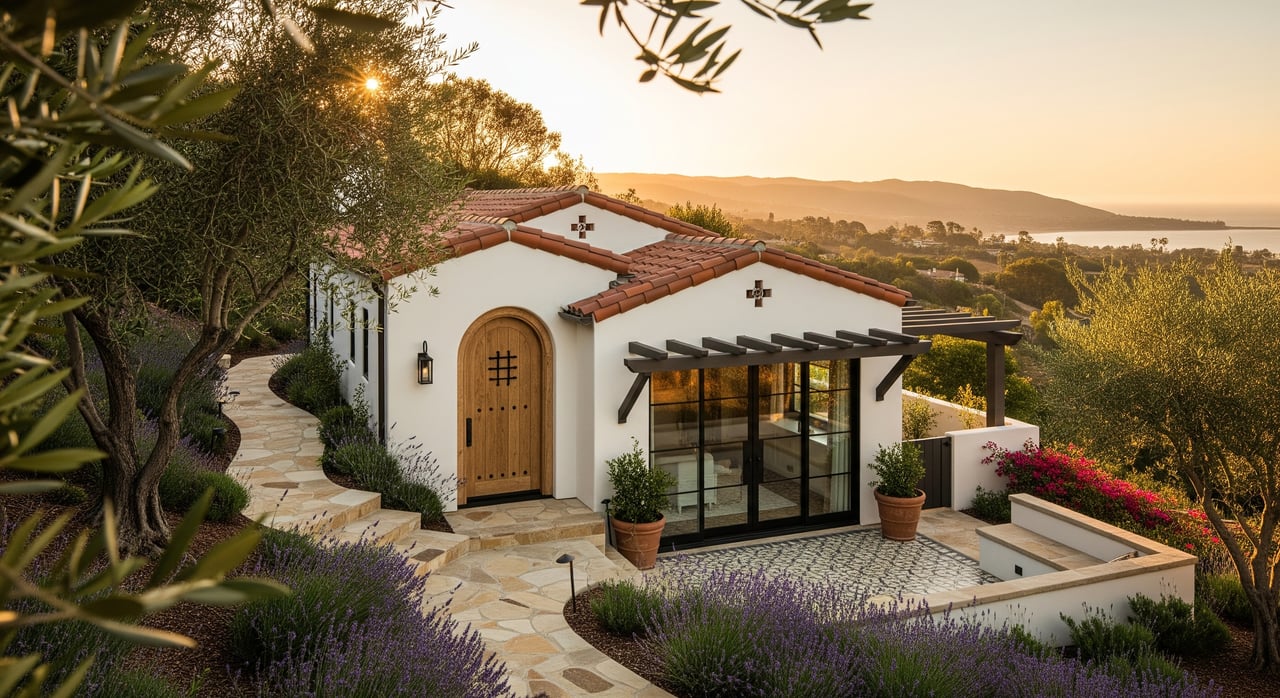
Favor low rooflines, small-scale massing, and materials that blend with the natural setting. Muted colors, natural textures, and corrosion-resistant hardware perform well in coastal conditions.
Placement and privacy
Site the ADU to minimize view impacts and preserve mature trees where feasible. Screen utilities and mechanical equipment. Protect neighbor privacy with strategic setbacks and landscape buffers.
Landscaping and stormwater
Use native, drought-tolerant plantings that meet defensible space requirements. Plan for permeable surfaces and practical on-site stormwater management.
Accessibility and flexibility
Single-level layouts, wider doors, and step-free entries support aging in place and multigenerational living. These choices also increase long-term utility and market appeal.
Your permitting path
Use this 9-step roadmap to plan, permit, and build efficiently.
- Feasibility check
- Confirm zoning and setbacks. Identify if your parcel is in the Coastal Zone, WUI, floodplain, or a geologic hazard area. Ask County Planning & Development whether a Coastal Development Permit is likely.
- Utilities and waste systems
- Verify water service and meter capacity. Determine if you are on public sewer or septic and whether upgrades are needed.
- Design concept and team
- Engage an architect or designer with coastal and wildfire experience. Add geotechnical or civil engineers for steep or complex sites.
- Pre-application review
- Meet with County staff to confirm required studies, design review needs, and coastal permit triggers. Early feedback reduces surprises.
- Submit permits
- Ministerial ADUs that meet objective standards can move through building permit review. If coastal or resource issues apply, expect discretionary review with public notice.
- Fire review and mitigation
- Coordinate with the fire authority for access, water supply, and defensible space. Cal Fire also provides statewide standards at Cal Fire resources.
- Utility and system work
- Secure sewer capacity and connection permits or complete a septic evaluation and upgrades if required. Confirm water meter sizing and any conditions.
- Construction and inspections
- Obtain the building permit and schedule inspections. Complete conditions of approval, including landscaping and stormwater measures.
- Final occupancy and rental compliance
- Obtain a certificate of occupancy. If you plan to rent, confirm any local registration or rental requirements.
Timelines and expectations
- Ministerial ADUs: Often processed in several months when straightforward.
- Coastal or discretionary projects: Plan for 6 to 12+ months depending on studies, hearings, and complexity.
Fees and cost drivers
Expect variability based on scope. Common drivers include utility connections, septic replacement or upgrades, geotechnical work, wildfire measures, and drainage or landscaping requirements. Some state limits may reduce certain fees for smaller ADUs.
Practical answers to common questions
- Can you build an ADU in Montecito? Often, yes, but feasibility turns on zoning, coastal status, setbacks, slope, fire access, and utility capacity. Start with a County planning check.
- How big can it be? Detached ADUs are commonly allowed up to about 1,200 square feet under state baselines. JADUs are capped at 500 square feet. Verify current County standards for your parcel.
- Do you need a Coastal Development Permit? Possibly. It depends on location, resource impacts, and Local Coastal Program consistency.
- What about taxes and rentals? New construction usually increases assessed value. Short-term rental rules are separate and can be strict. Confirm specifics with the County Assessor and County ordinances.
- Will neighbors be able to object? Ministerial projects that meet objective standards limit discretionary appeals. Discretionary coastal or design reviews include public notice and potential appeals.
Next steps and trusted resources
Start early conversations with the right agencies and experts:
- State ADU overview: HCD ADU guidance and FAQs
- Coastal planning: California Coastal Commission ADU guidance
- Fire and defensible space: Santa Barbara County Fire Department and Cal Fire
- Water service: Montecito Water District
- Sewer service: Montecito Sanitary District
When you are ready to align your ADU plan with your property, timeline, and lifestyle goals, reach out for discreet, local guidance. Connect with Lindsay Semler to map your next steps with a tailored plan.
FAQs
What is an ADU vs. a JADU in California?
- An ADU is a self-contained secondary home on your lot, while a JADU is created within your existing house and is limited to 500 square feet under state baselines.
What is the maximum ADU size allowed in Montecito?
- State baselines commonly allow detached ADUs up to about 1,200 square feet, but you should confirm local limits and coastal considerations with Santa Barbara County.
Do Montecito ADUs need a Coastal Development Permit?
- Some do; it depends on your site, potential resource impacts, and Local Coastal Program consistency, which can add time and public notice.
How does wildfire risk affect an ADU in Montecito?
- Expect WUI construction standards, defensible space requirements, and fire access rules reviewed by the fire authority.
Can you rent a Montecito ADU as a short-term rental?
- Short-term rental rules are separate and locally regulated; confirm current County policies before planning STR use.
Will an ADU increase Santa Barbara County property taxes?
- New construction typically raises assessed value; verify specifics with the Santa Barbara County Assessor.
Do you need new parking for a Montecito ADU?
- State law narrows parking requirements in many cases, but site conditions and coastal factors can affect what is required; confirm during your planning check.
How long does ADU permitting take in Montecito?
- Straightforward ministerial reviews can take several months; coastal or discretionary projects often require 6 to 12+ months depending on studies and hearings.